Four interconnected programmes
Rights create dignity and protection. Health creates safety and wellbeing. Livelihood creates resilience. Education creates lifelong opportunity. Together, they form a pathway for Deaf and non-speaking people to thrive.
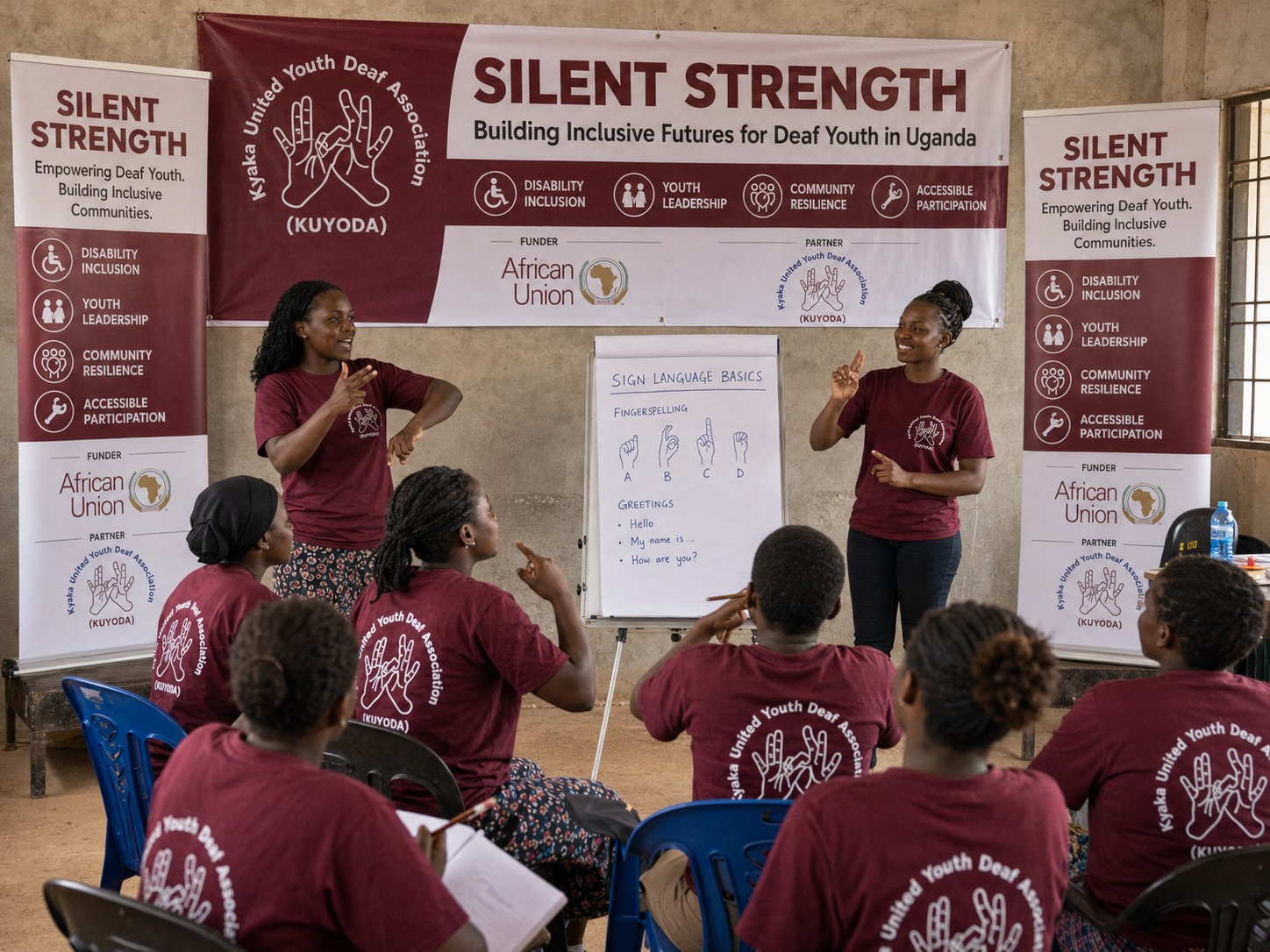
Rights
Goal — To advance the rights, dignity, protection and participation of Deaf, hard-of-hearing and non-speaking children, women, girls and youth in refugee and host-community settings.
Key activities
- Rights awareness sessions for Deaf and non-speaking youth
- Child safeguarding and protection training
- SGBV prevention and survivor-centred referrals
- Community dialogues to reduce stigma and harmful beliefs
- Advocacy for sign language access in public services
- Support to caregivers and families on dignity and protection
- Participation of Deaf youth and women in local decision-making
Expected change
Deaf and non-speaking children, women, girls and youth are safer, more confident, better informed about their rights and more visible in community systems that affect their lives.
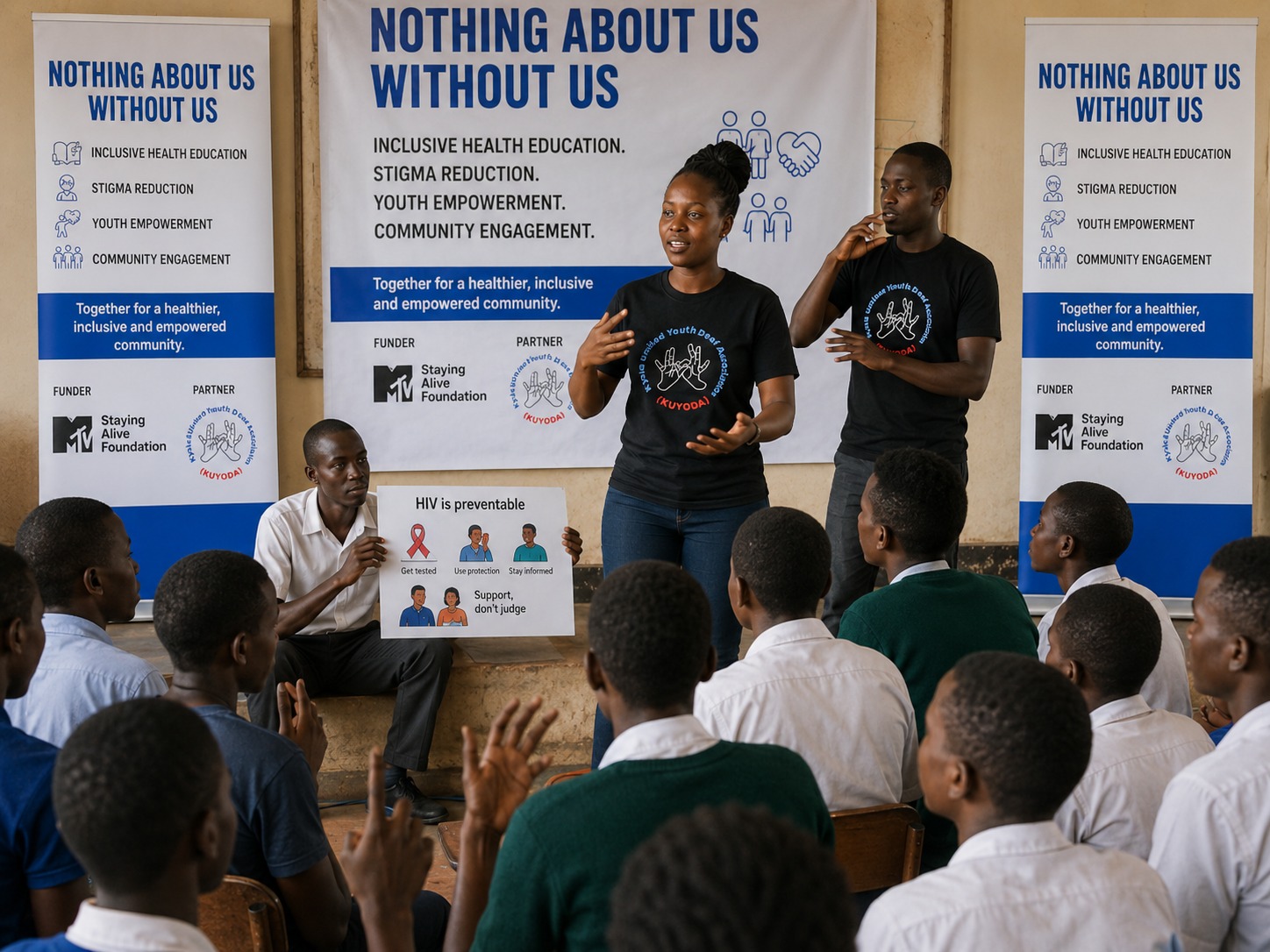
Health
Goal — To improve access to inclusive, confidential and sign-language-accessible health, HIV, SRHR, SGBV and psychosocial support services.
Key activities
- Sign-language-accessible HIV and SRHR education
- Menstrual health, consent and body-safety sessions for girls and young women
- SGBV prevention, safe reporting and referral support
- Confidential peer support for young people facing stigma
- Caregiver dialogues on health, protection and communication
- Sensitisation of health workers on respectful and accessible care
- Referral accompaniment to health, legal and psychosocial services
Expected change
Deaf and non-speaking children, youth, women and girls receive health information and services in ways they can understand, trust and use safely.
Livelihood
Goal — To strengthen economic dignity, self-reliance and resilience among Deaf youth, women, girls, caregivers and vulnerable families.
Key activities
- Skills development for Deaf youth and women
- Support for caregiver savings and resilience groups
- Training in small enterprise and basic financial literacy
- Production of visual learning materials and sign-language resources
- Youth facilitator development and community leadership pathways
- Livelihood linkages for vulnerable families
- Promotion of economic inclusion for Deaf women and girls
Expected change
Deaf youth, women and caregivers gain confidence, skills and practical opportunities to support themselves and contribute to their families and communities.
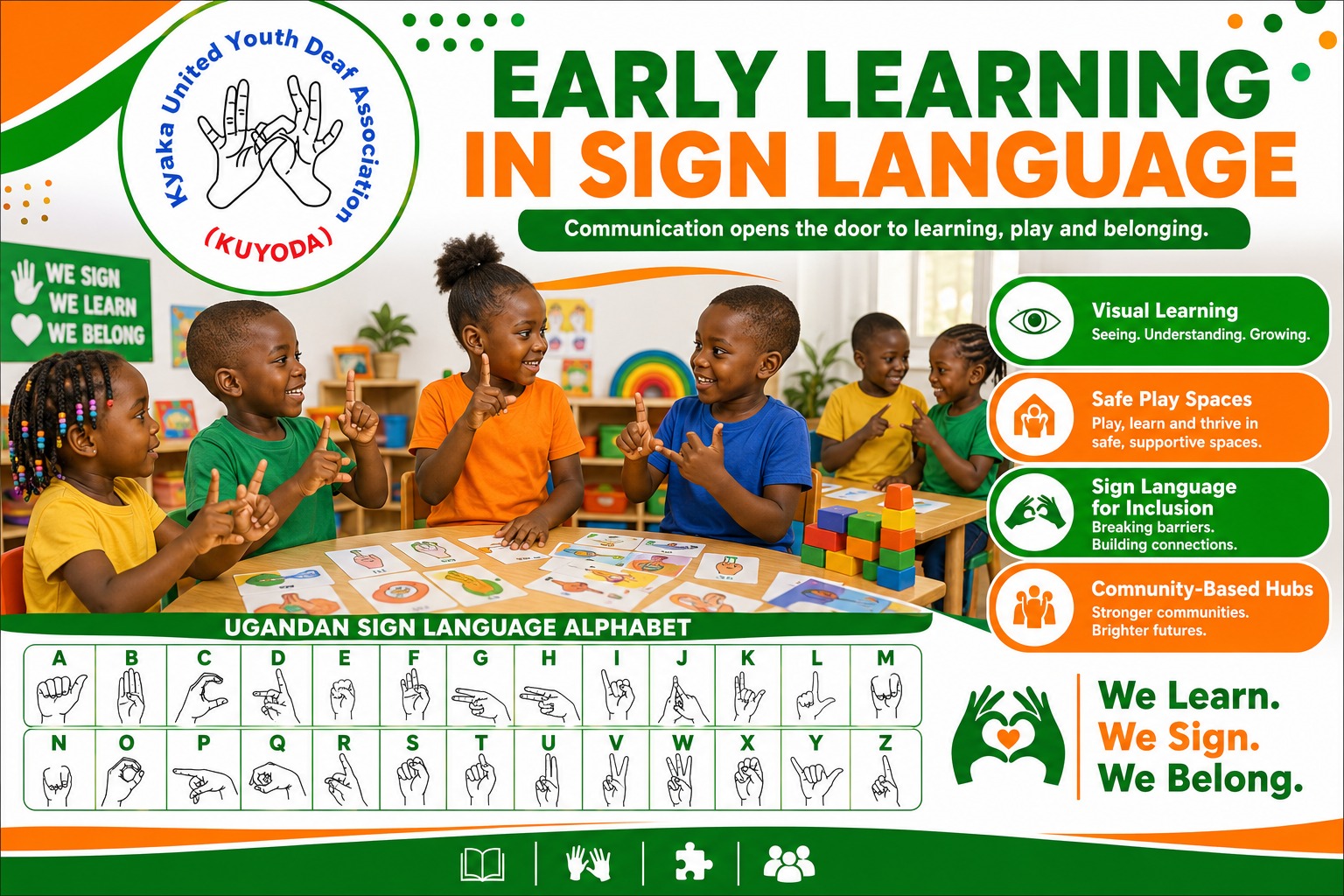
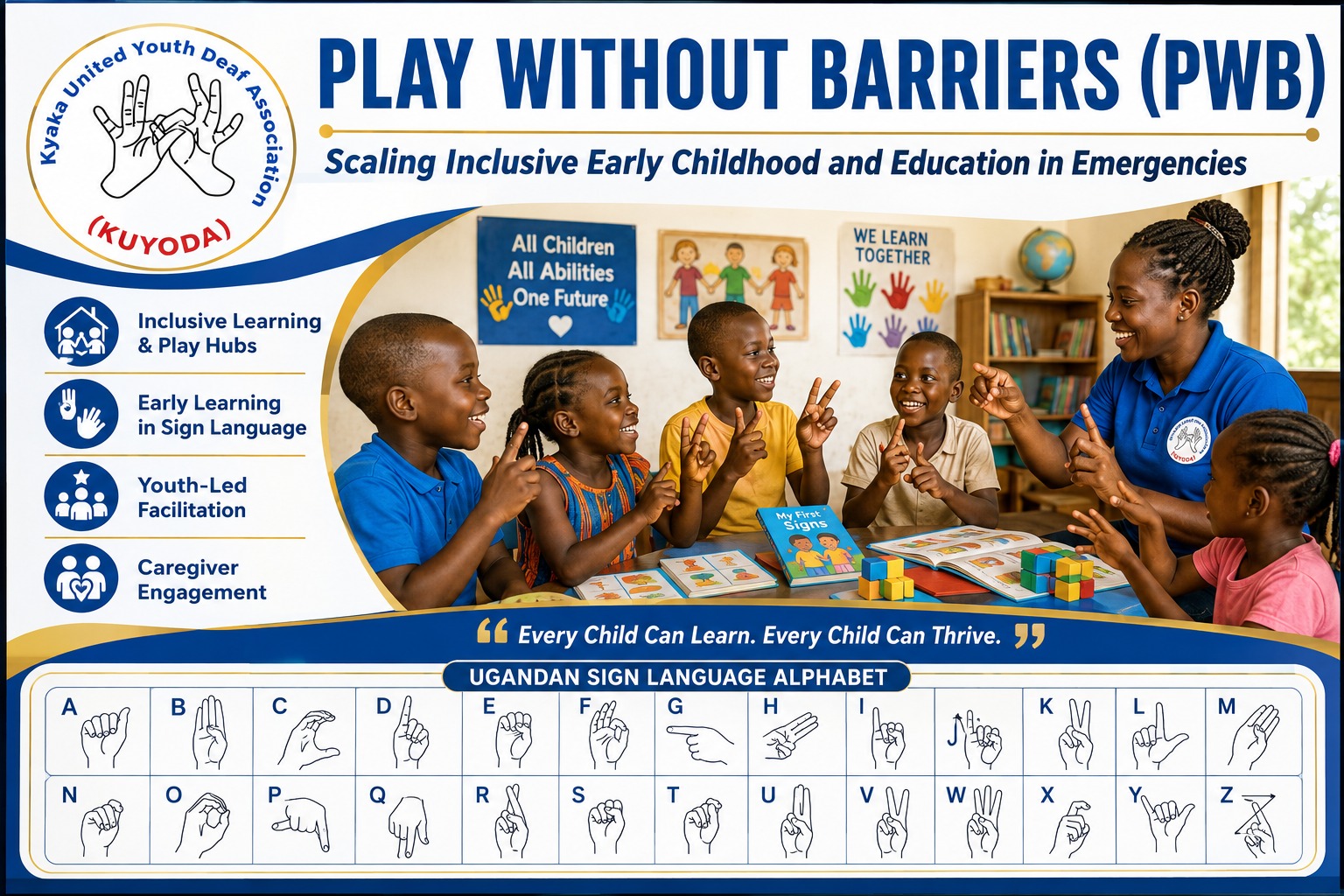
Education
Goal — To expand inclusive, sign-language-based and play-based learning for Deaf and non-speaking children.
Key activities
- Inclusive learning and play hubs
- Ugandan Sign Language learning sessions
- Visual storytelling and play-based learning
- Training of Deaf and hard-of-hearing youth facilitators
- Caregiver training in basic sign language and home learning
- School transition support for Deaf and non-speaking children
- Development of adapted visual learning materials
Expected change
Deaf and non-speaking children communicate better, participate more confidently, build friendships, prepare for school and experience learning as a place of dignity rather than exclusion.